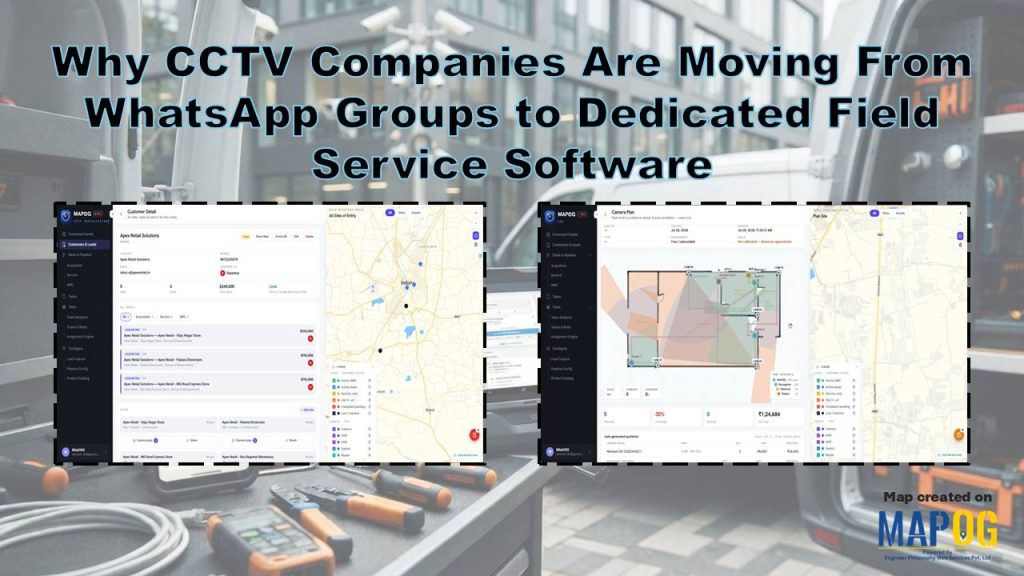
Running a CCTV installation company often means starting the day by hunting for a lead buried in a group chat, trying to remember instructions you gave a technician over a phone call, or searching through yesterday’s messages to find a customer’s service complaint. That’s the reality when your business runs on a chat app. Today, CCTV Companies Are Moving away from this scattered approach because it slows down operations and creates confusion. Here’s what changes when your entire operation moves to MAPOG‘s Field Sales & Service—a centralized platform built to manage leads, field technicians, installations, quotations, and service requests in one place.
The Real Problem: Why CCTV Companies Are Moving from WhatsApp Groups to Dedicated Field Service Software
If you run a CCTV installation company, your day probably starts with a lead buried somewhere in a group chat, a technician you briefed over a call an hour ago, and a service complaint hiding under someone’s photo from yesterday’s job. CCTV companies struggle because WhatsApp wasn’t built for managing daily field operations. Leads, technician updates, and customer complaints quickly disappear inside busy WhatsApp groups. By the time anyone circles back, the customer has already found someone faster to respond. That’s one of the main reasons CCTV Companies Are Moving away from WhatsApp and adopting dedicated field service software.
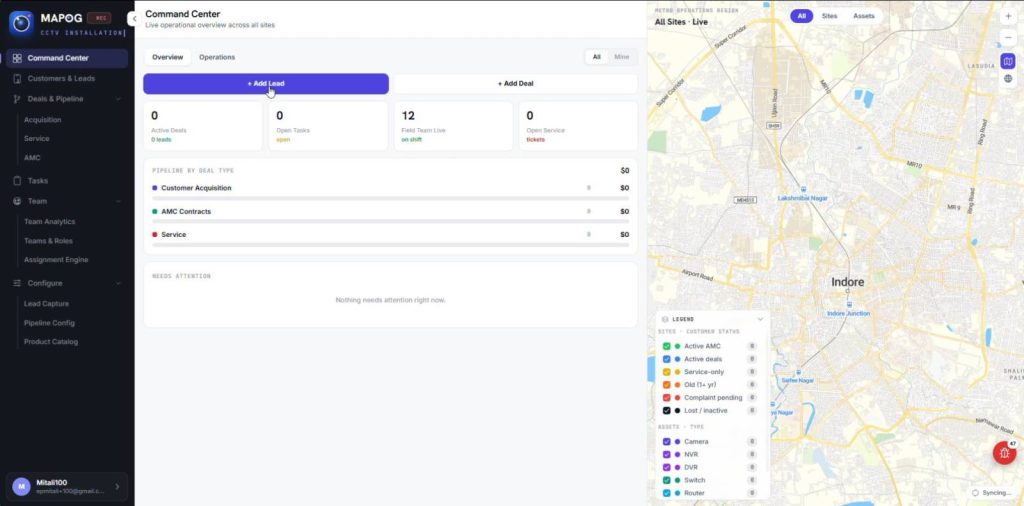
MAPOG removes this bottleneck entirely, giving owners a single place to manage agents, routes, and on-site visits instead of a never-ending scroll.
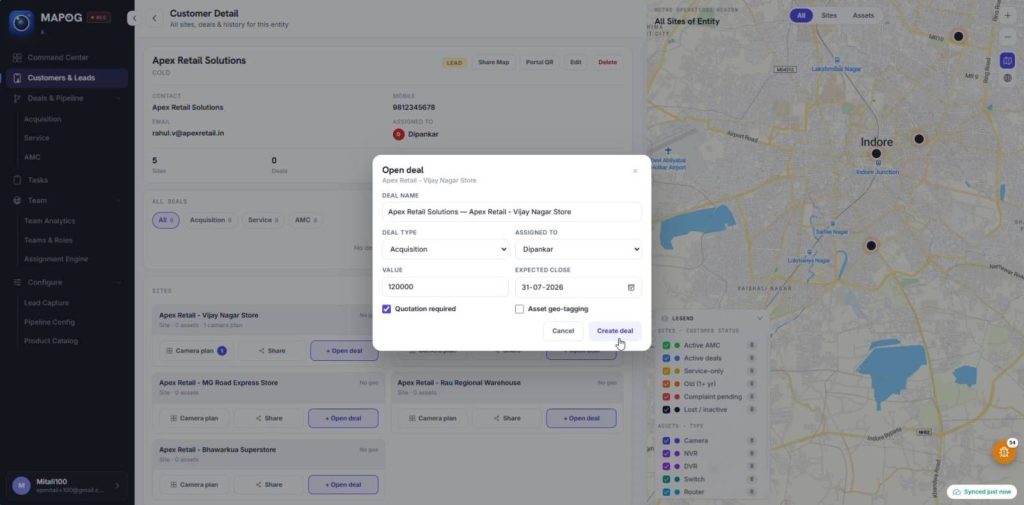
1. Lead and Site Management Replace Chat Threads
Picture a promising lead landing in the group chat on a Friday evening, right between a technician’s job-completion photo and someone asking about a delayed payment. By Monday morning, it’s gone, not deleted, just buried and forgotten.
That’s the quiet cost of running a pipeline inside a chat app. A proper pipeline fixes this by giving each lead a fixed place to live, with every site tied to its own dedicated deal record, so a client spread across five locations never turns into five tangled conversations. Bulk uploads through CSV, or a quick pin dropped on a map, replace the retyping that made consistent tracking nearly impossible before.
A lead that stays visible today is a lead that’s still alive next week.
2. Camera Planning Replaces Verbal Explanations
A technician explains camera placement over a phone call: one near the entrance, one covering the back door. The customer nods along and signs off on something they’ve never actually seen. Installation day arrives, and the coverage doesn’t quite match what they’d imagined.
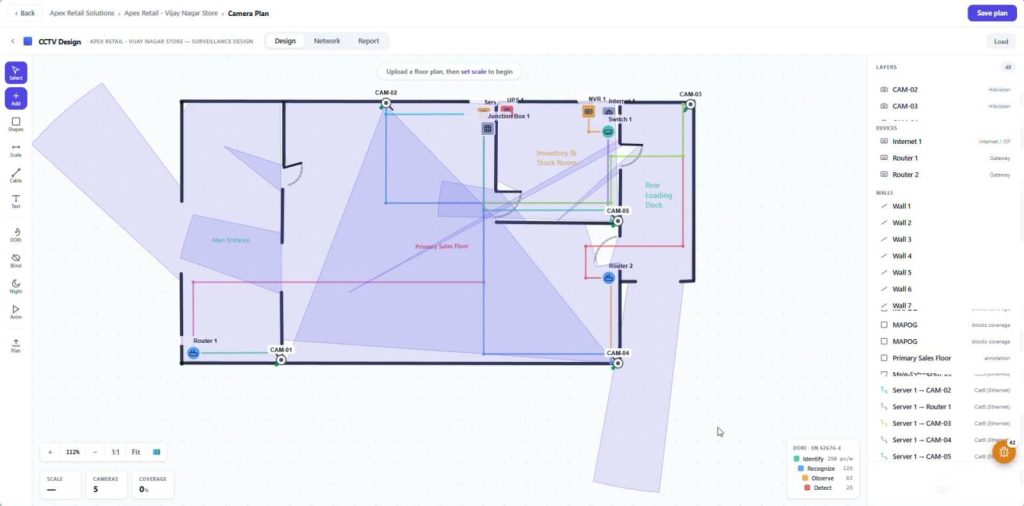
Now imagine that same conversation happening directly on the customer’s floor plan instead, with coverage zones and blind spots glowing in color exactly where each camera will sit. DORI compliance levels, identify, recognize, observe, detect, stop being technical jargon and become something visible on screen. Cameras, NVRs, routers, and cabling all exist together on that same layout, merging the technical design and the customer-facing proposal into one document.
The customer isn’t picturing coverage anymore. They’re looking straight at it. Read more: Share the Camera Plan and Quotation With Your Customer Directly.
3. Auto-Generated Quotations Improve Accuracy
An installer finishes a site visit, then spends the evening recalculating costs by hand because the customer asked for one more camera at the last minute. By the time the quote finally goes out, the customer has already gotten pricing from someone else.
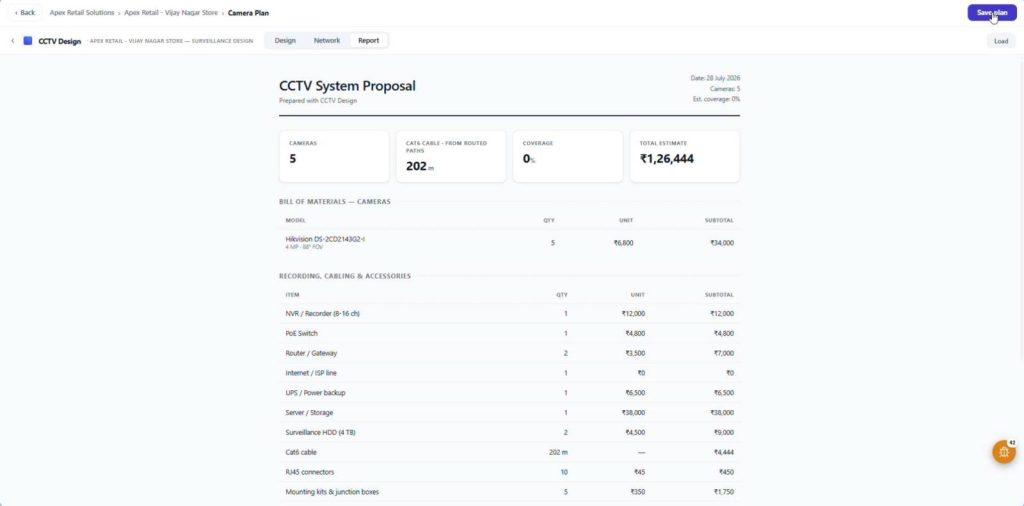
Once the layout exists, the bill of materials should build itself, sorting every camera, switch, and length of cable into a clean line-item total. What used to eat an entire evening now takes the time it takes to click a button, with the total estimate appearing instantly.
That’s the difference between a quote that feels rushed and one that’s ready before the phone even rings again. Checkout: Send a Professional CCTV Quotation in Minutes.
4. Installation Starts With Clear Assignments
The customer approves the camera plan and quotation. Now the real work begins. Someone still needs to assign the job, share the right information, and make sure nothing gets missed.
Instead of another phone call or WhatsApp message, the installation goes straight to the assigned technician. They receive the approved camera layout, site details, and installation checklist on their mobile device. Everyone works from the same plan, so there is no confusion about camera locations or equipment.
After installation, the technician records each camera with its serial number and site location.
5. Service Requests Move Beyond Phone Calls
A camera goes down at a warehouse at 7 AM. The customer calls, struggles to explain which camera, and waits while someone tries to figure out which technician is actually nearby.
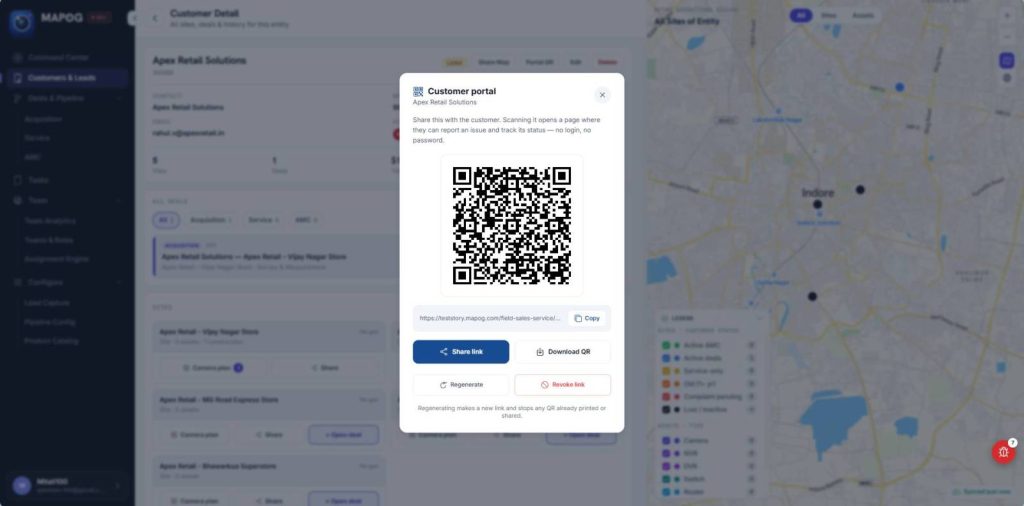
Now picture that same customer scanning a QR code stuck on the camera instead, opening a portal where they can report the issue and track its status without any login or password. The job routes straight to the nearest available technician, not simply whoever happens to answer first. A shareable link or downloadable QR code lets that customer follow the ticket’s progress on their own. See Let Your Customers Raise a Service Request by Just Scanning the Camera and Stop Losing CCTV Customers After Installation: Use QR Code Service Stickers.
6. AMC Management with Dedicated Field Service Software
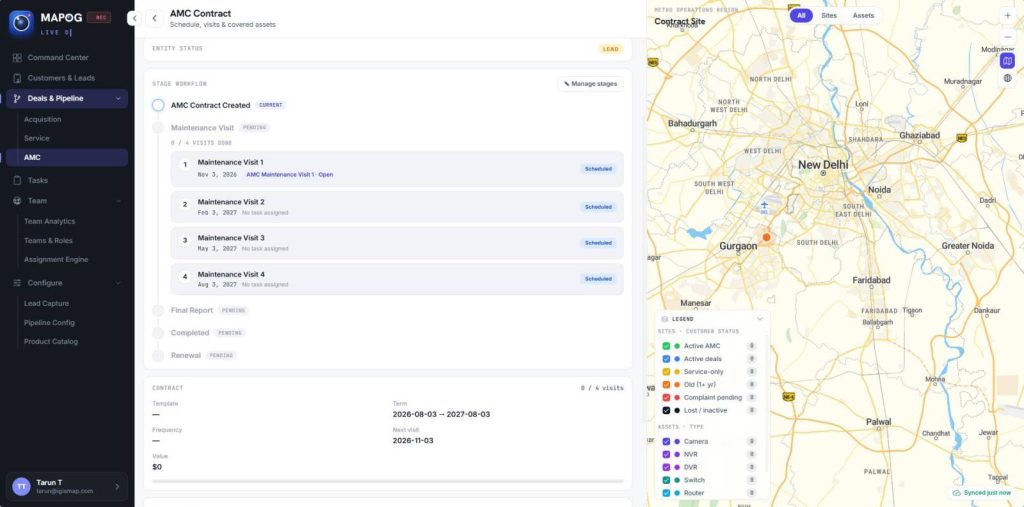
Once the installation is complete, you can create an AMC in a few clicks. The system schedules maintenance visits automatically based on the selected frequency. In addition, technicians receive checklists for every visit, so inspections stay consistent across every site.
As the contract approaches expiry, renewal reminders go out automatically. More here: Never Miss an AMC Renewal Again and Turn One-Time CCTV Installations Into Recurring AMC Revenue.
Why Dedicated Field Service Software Matters
Individually, the pipeline, the camera planner, the QR-based service request, and the live dashboard each solve one isolated headache. The real transformation begins when everything connects. A lead turns into a deal, a deal becomes an installation, and your team resolves every service ticket without losing messages. That’s why CCTV Companies Are Moving toward MAPOG’s Field Sales & Service Software. It helps CCTV companies stop reacting to chats and start running operations built for growth.