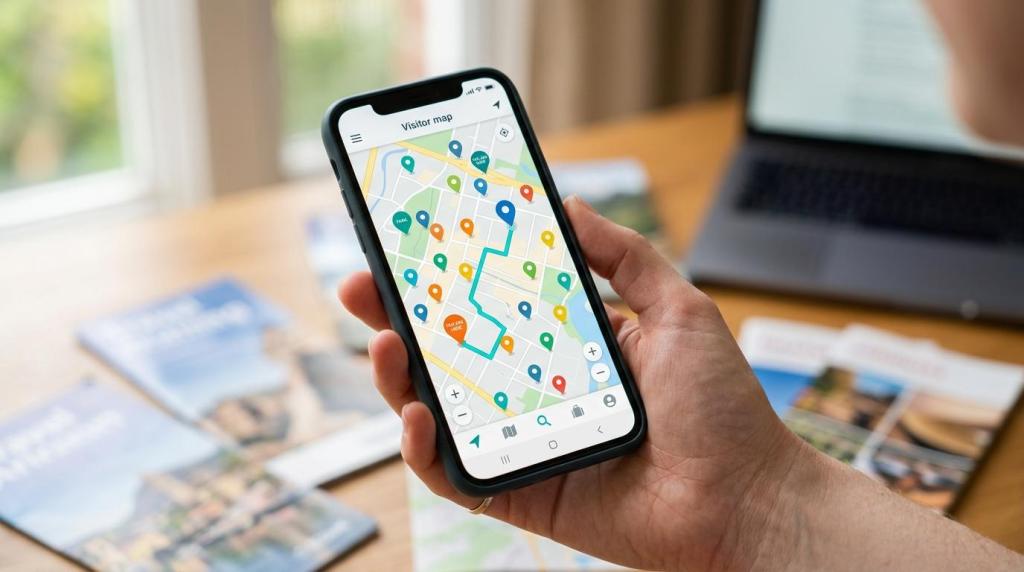
MAPOG helps destination brands turn a simple map into a working visitor experience. If you run a tourism board, hotel group, resort, tour company, attraction network, or transport service, we give you a no-code way to build interactive visitor maps that people can explore, share, and use on any device.
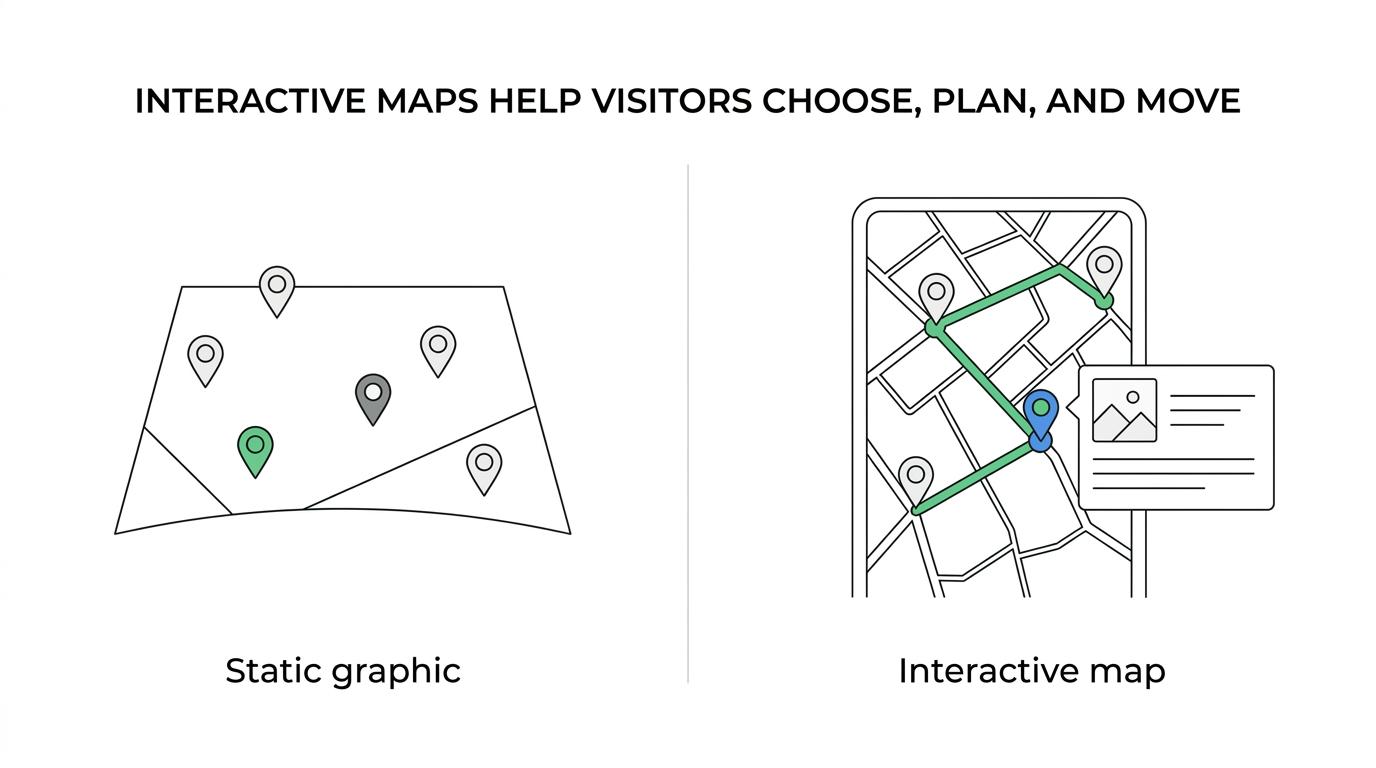
Instead of sending visitors to a static location graphic or a disconnected PDF, MAPOG lets you publish a media-rich map on your own website, booking page, or campaign landing page. You can add images, videos, links, and notes to each point, organize routes and itineraries, and keep control over what is public, private, or team-only.
MAPOG interactive visitor maps for tourism boards, resorts, and travel brands
A visitor map should help people choose, plan, and move. MAPOG gives destination marketing teams and hospitality brands one place to present accommodations, attractions, routes, neighborhoods, visitor services, and trip ideas in a format travelers already understand.
MAPOG interactive visitor maps can also support very different destination models without forcing you into a rigid template. A tourism board can highlight districts, events, and trip clusters, while a resort can map facilities and entry points, and a multi-property hotel brand can show every location on a single map with booking links for each one.
To make that practical, your MAPOG visitor map can bring together content such as:
- Destination highlights: attractions, landmarks, local businesses, trailheads, beaches, districts, and seasonal stops
- Stay and book details: hotels, resorts, rooms, property pages, and booking links
- Routes and itineraries: self-guided day plans, road trips, walking routes, transport links, and activity sequences
MAPOG maps are embeddable and shareable, so visitors can explore your destination without leaving your website, and your team can maintain one clearer source of location content instead of scattering it across pages and files.
“MAPOG visitor maps are built to be interactive, shareable, and embeddable, not just static location graphics.”
Visitor maps that improve trip planning, on-site wayfinding, and destination storytelling
When a traveler opens a visitor map, they should get more than a pin. MAPOG lets you attach images, videos, links, and notes to each mapped point, which makes the map useful before arrival and while the visitor is already on the ground.
That matters because map-led behavior is already normal during trips. In one regional tourism study, 64% of visitors reported using a map app like Google Maps during their trip, while 5% or fewer reported using billboards, guidebooks, magazines, or newspapers.
“MAPOG helps destination brands meet visitors where they already plan trips: 64% used a map app during travel in a regional visitor study.”
MAPOG is especially useful when your visitor experience depends on spatial context. Hotels and resorts can map on-property amenities such as pools, gyms, restaurants, and entry gates. Hospitality teams can also use floor plans and pinned facilities to reduce confusion for arriving guests and make orientation easier.
Because MAPOG is mobile-friendly, your map works where visitors need it most: on the phone in transit, on site, or mid-itinerary. That gives your audience faster answers and gives your brand a better chance to keep attention during the planning and travel window, not just before it.
“MAPOG visitor maps can include images, videos, links, and notes for each point, so your map carries real decision-making content.”
MAPOG supports both public visitor engagement and internal tourism planning
Many destination teams need one map for visitors and another for operations. MAPOG helps bridge that gap by combining customer-facing mapping with tools for planning, analysis, route design, GIS data download, and mobile data collection.
That means your public map does not have to be disconnected from your working map. MAPOG role-based access and privacy controls help you decide what the public sees, what partners can update, and what stays internal for field operations, inspections, or destination planning.
“MAPOG combines public-facing visitor maps with route planning, GIS data download, and mobile data collection in one platform.”
This matters for organizations that manage dispersed assets or partner networks. A tourism board may want a public visitor guide and a private planning layer. A tour operator may need mapped itineraries for customers and separate route planning for staff. A transport or field service team may need territory design and mobile access without handing everything to a developer.
MAPOG also fits how the travel sector already presents and studies place-based information. Official tourism and park organizations use interactive tables, maps, dashboards, and downloadable data to support planning, benchmarking, and visitor-use analysis. If your destination still relies on static maps for public engagement, you are asking visitors to work harder than they need to.
When MAPOG is the right visitor map platform for your destination brand
MAPOG is a strong fit when you need a visitor map to do real work for both your audience and your team. In practice, that usually looks like one or more of these situations:
- You need a map people can act on: not just a visual, but a tool with routes, property details, media, and links
- You want to publish without technical overhead: MAPOG does not require technical or programming knowledge, which helps lean teams move faster
- You manage many places or layers of information: multiple properties, facilities, attractions, tours, regions, or partner listings can be organized in one map environment
MAPOG is also a good fit if your content changes often. Seasonal attractions, event routes, updated visitor notices, new partners, and changing property details are easier to manage when your map is a living asset instead of a graphic that has to be redesigned each time.
If you need a visitor map that supports trip inspiration, on-site navigation, and operational clarity at the same time, MAPOG gives you a more flexible option than a static site map or a one-purpose pinboard.
Start building a visitor map your audience will actually use
MAPOG gives destination brands a practical way to publish interactive visitor maps that are easier to update, easier to share, and easier for travelers to use. You get a map that can support destination storytelling, booking journeys, on-site guidance, and internal planning without needing a developer to build it from scratch.
If you are ready to create a visitor map for your tourism brand, hotel group, resort, tour operation, or destination organization, talk to MAPOG about the experience you want your visitors to have and the map structure your team needs to manage it.